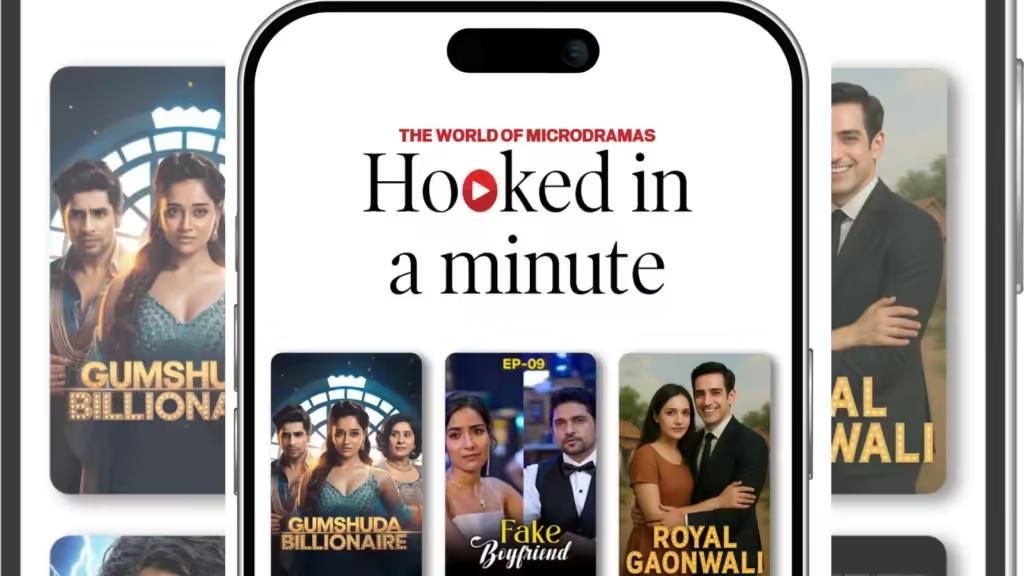
In 2025, people don’t scroll slowly.
They swipe fast, judge faster, and decide in 1–2 seconds whether your content is worth watching.
You could have:
- Great storytelling
- Clean editing
- Useful information
But if your hook fails, none of that matters.
This is why hooks have become the single most important element in content creation and UGC today.
What Is a Hook (In Simple Terms)?
A hook is the first moment of your video that makes someone stop scrolling.
It can be:
- A line
- A reaction
- A visual
- A question
- A statement
Its only job is to answer this question in the viewer’s mind:
👉 “Why should I watch this?”
Why Hooks Matter More Than Ever in 2025
Attention is the new currency.
With:
- Reels
- Shorts
- TikTok-style feeds
- Endless content supply
Platforms reward videos that hold attention early.
Strong hooks lead to:
- Higher watch time
- Better retention
- More reach
- Stronger ad performance
No hook = no visibility.
Why Most Creators Struggle With Hooks
Creators usually start videos like:
- “Hi guys…”
- “So today I’m going to…”
- “Let me tell you about…”
By the time the sentence finishes, the viewer has already scrolled.
The problem isn’t confidence.
The problem is starting too slowly.
Examples of Hooks That Actually Work
You don’t need dramatic acting. You need clarity and curiosity.
1. Problem-Based Hooks
- “I wasted ₹5,000 before figuring this out.”
- “Nobody warned me about this mistake.”
2. Curiosity Hooks
- “This changed how I create content.”
- “I didn’t expect this to work…”
3. Direct Benefit Hooks
- “Here’s how to get brand deals without followers.”
- “This saves me 2 hours every day.”
4. Reaction Hooks
- Surprise
- Confusion
- Relief
- Excitement
Human emotions stop scrolls.
Why Hooks Are Critical for UGC Content
UGC is often used in:
- Paid ads
- Brand pages
- Product pages
If the hook fails:
- Ads get skipped
- CPC increases
- Performance drops
That’s why brands actively look for creators who understand hooks — not just delivery.
Many brands rely on UGC-focused agencies that help creators structure hooks properly and test multiple variations.
One example is Creator Navigator, which helps brands and creators build UGC videos around strong opening hooks, clear storytelling, and ad-ready formats designed for performance.
How Creators Can Improve Hooks Instantly
Use this simple framework:
Hook = Problem + Curiosity
Ask yourself:
- What mistake did I make?
- What result surprised me?
- What would make me stop scrolling?
Then start with that — not introductions.
Why Brands Pay for Good Hooks
Brands don’t pay for videos.
They pay for attention.
Creators who write strong hooks:
- Get repeat work
- Are easier to scale in ads
- Deliver better results
- Build long-term brand trust
That’s why hook-writing is now a high-income skill in the creator economy.
Hooks Don’t Need to Be Loud — Just Clear
A hook doesn’t mean shouting.
It means:
- Starting with value
- Respecting attention
- Getting to the point
Simple, honest hooks often outperform dramatic ones.
Final Thoughts
In 2025:
- Editing can be learned
- Tools are available to everyone
- Content quality is everywhere
But attention is limited.
If you master hooks:
- Your content gets watched
- Your stories get heard
- Your opportunities increase
Before you improve anything else in your content, improve your first 2 seconds.
Because if people don’t stop —
they’ll never stay.